WIVIE SP-T4-SN42BI58 Lead Solder Paste Melting Point SN42/BI58 138 Particle 20G
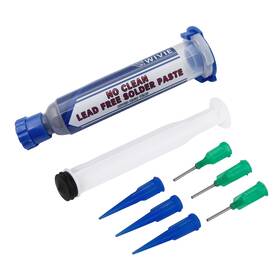
( Brand: Wivie ), ( Manufacturer Part Number: SP-T4-SN42BI58 ), ( Part Type: Solder Paste Point ), ( Included Components: Tip Tinner ), ( Model Name: Solder Paste ), ( Color: 20g ), ( Power Source Type: Fuel Powered ), ( Unit Count: 1.0 ), ( Package Dimensions Lxwxh: 6.61x3.86x1.02 Inches ), ( Weight: 0.07 Pounds )
Review WIVIE Sn42/bi58 Lead free Solder Paste 138 Melting Point T4 Particle 20g
The **WIVIE SP-T4-SN42BI58** is a high-performance, lead-free solder paste designed for precision assembly applications requiring exceptional reliability, thermal stability, and mechanical strength. Formulated with a **SN42BI58 alloy composition** comprising 42% tin (Sn) and 58% bismuth (Bi) this solder paste delivers an optimal balance of low-temperature performance and mechanical robustness, making it ideal for sensitive electronics, medical devices, and automotive components where thermal cycling and vibration resistance are critical. With a **melting point of approximately 138 C**, the SP-T4-SN42BI58 enables efficient reflow soldering processes, reducing energy consumption while maintaining strong joint integrity. The **T4 particle size distribution** ensures smooth application, minimal bridging, and consistent wetting across a wide range of substrate finishes, including ENIG, OSP, and immersion silver, without compromising adhesion or solderability. Weighing **20 grams**, this solder paste is packaged in a hermetically sealed syringe for precise dispensing, minimizing waste and contamination while extending shelf life. Its **lead-free formulation** adheres to RoHS compliance standards, eliminating environmental and health risks associated with traditional tin-lead alloys, while its **low-temperature capability** allows for soldering on temperature-sensitive substrates that cannot withstand higher reflow profiles. Whether used in high-density interconnects, flexible circuits, or complex PCB assemblies, the WIVIE SP-T4-SN42BI58 provides a reliable, durable solution for demanding manufacturing environments where performance, consistency, and sustainability are paramount.
**Pros and Cons of Buying Wive SP-T4-SN42/Bi58 Lead-Free Solder Paste (138 C Melting Point, T4 Particle Size, 20g)**
### **Pros:**1. **Lead-Free Compliance** This solder paste meets RoHS (Restriction of Hazardous Substances) and REACH regulations, making it suitable for applications requiring environmentally friendly materials. This is critical for industries like electronics manufacturing, medical devices, and automotive components where lead-free soldering is mandatory.
2. **High Reliability in Electronics Assembly** The **138 C melting point** is optimized for surface-mount technology (SMT) and wave soldering processes, reducing the risk of thermal damage to sensitive components (e.g., plastics, adhesives, or temperature-sensitive substrates). It provides a balance between solderability and thermal stability.
3. **Fine Particle Size (T4, 20 40 m)** The **T4 particle distribution** ensures excellent wetting and filling capabilities, which is essential for fine-pitch components (e.g., BGA, CSP, or micro-BGA packages). This reduces voiding and improves joint strength, crucial for high-density assemblies.
4. **Bismuth-Tin (Bi58/Sn42) Alloy Composition** The **Bi58Sn42 eutectic alloy** offers a lower melting point than traditional lead-free solders (e.g., SAC305), reducing thermal stress on PCBs and components. It also provides good mechanical strength and corrosion resistance, making it durable for long-term use.
5. **Consistent Performance** Reputable brands like Wive (a subsidiary of Indium Corporation) are known for high-quality solder pastes with stable viscosity, storage life, and reflow profiles. This reduces the risk of defects like bridging, insufficient wetting, or premature oxidation.
6. **Versatility in Applications** Suitable for **automotive electronics, aerospace, medical devices, and consumer electronics**, where reliability under vibration, thermal cycling, and humidity is critical. The paste can be used in both **stencil printing and dispensing** methods.
7. **Extended Shelf Life** Properly stored (in a cool, dry place, away from direct sunlight), lead-free solder pastes like this typically have a **shelf life of 12 24 months**, reducing waste from expired inventory.
8. **Compatibility with Common Substrates** Works well with **FR-4, ceramic, and metal-core PCBs**, as well as various lead-free solderable finishes (e.g., ENIG, OSP, HASL-Sn).
---
### **Cons:**1. **Higher Cost Compared to Lead-Based Solders** Lead-free solders are generally **20 50% more expensive** than traditional tin-lead (Sn63Pb37) pastes. This can increase production costs, especially for high-volume manufacturing.
2. **Potential for Oxidation and Storage Challenges** Bismuth-containing solders can be more prone to **oxidation** if not stored properly (e.g., in a nitrogen-purged container). Improper storage may lead to **viscosity changes or reduced solderability**, requiring more frequent reflow optimization.
3. **Limited Compatibility with Some Materials** While Bi58Sn42 is generally compatible with most substrates, it may not perform as well as **SAC alloys (Sn-Ag-Cu)** in extreme temperature cycling or high-vibration environments. Some applications may still prefer SAC for better fatigue resistance.
4. **Potential for Cold Cracks in Thick Joints** Due to its **lower melting point and different thermal expansion properties**, this alloy may be more susceptible to **cold cracking** in thick or high-stress joints compared to SAC solders. Proper design and reflow profiles are necessary.
5. **Solderability Issues with Certain Finishes** Some **gold-plated or immersion silver finishes** may require activation fluxes to ensure proper wetting with Bi58Sn42, adding complexity to the process.
6. **Limited Availability of Specialty Flux Systems** While this paste is widely used, some niche applications may require **custom flux formulations** (e.g., for high-reliability aerospace), which could add extra costs or lead times.
7. **Potential for Residue Issues** Some lead-free pastes leave **more flux residue** than lead-based ones, which may require additional cleaning steps in sensitive applications (e.g., medical or high-frequency electronics).
8. **Training and Process Adjustments Needed** Shifting from lead-based to lead-free soldering may require **operator training** on proper stencil design, reflow profiles, and inspection techniques to avoid defects.
---
### **Conclusion:**The **Wive SP-T4-SN42/Bi58 lead-free solder paste** is a **high-quality, reliable choice** for applications requiring **RoHS compliance, fine-pitch soldering, and moderate thermal tolerance**. Its **138 C melting point, T4 particle size, and Bi58Sn42 composition** make it well-suited for **automotive, medical, and general electronics manufacturing** where lead-free materials are mandatory.
However, the **higher cost, storage sensitivity, and potential material compatibility issues** must be carefully considered. If **cost efficiency and extreme reliability** (e.g., aerospace, high-temperature cycling) are critical, alternatives like **SAC305 or SAC108** might be worth evaluating.
### **Recommendation:** - **Buy this solder paste if:**- You need a **lead-free, RoHS-compliant** solution for **SMT or wave soldering**.
- Your application involves **fine-pitch components (BGA, CSP)** where **T4 particle size** is beneficial.
- You operate in **automotive, medical, or consumer electronics** where **moderate thermal stress** is manageable.
- You have **proper storage conditions** (nitrogen-purged, cool, dry environment) to maintain paste integrity.
- **Consider alternatives if:**- **Cost is a major constraint** (e.g., high-volume production where SAC305 might be cheaper).
- Your application requires **extreme temperature cycling or high mechanical stress** (SAC alloys may perform better).
- You work with **legacy systems** that were designed for **Sn63Pb37** and lack lead-free process optimization.
For most **modern electronics manufacturing environments**, this paste is a **strong, well-supported choice** that balances performance, compliance, and reliability. Always **test a small batch** before full-scale adoption to ensure compatibility with your specific PCB and component materials.
Details:
Wide Applications - Suitable For BGA, SMT and PCB Repairs In Consumer Electronics. Low-Temp Melting At 138 C - Prevents PCB And Component Damage During Soldering. Sn42/Bi58 Lead-Free Solder Paste, 138 Melting Point, T4 Particle, Premium Alloy - Composition Ensures Strong Welding Joints And Oxidation Resistance. No-Clean Flux Residue - Non-Corrosive, Non-Conductive, And requires No Post-Cleaning.
T4 Fine Particle Size 20-38 m - Ideal For Precision Stencil Printing And Mini-Component Soldering.
part #: spt4sn42bi58 prices
- $17.09-$18.42
specifications weldtoolsam:
- brand: Wivie
- mpn: Sp-t4-sn42bi58
- part type: Solder Paste Point
- included components: Tip Tinner
- model name: Solder Paste
- color: 20g
- power source type: Fuel Powered
- unit count: 1.0
- package dimensions lxwxh: 6.61x3.86x1.02 Inches
- weight: 0.07 Pounds
general weldtoolsam:
- condition: New
- Tools Workshop Equipment > Power Tools > Welding Soldering Tools
returns weldtoolsam:
- method: Money back
- policy: Returns Accepted
- time: 30 Days
- paid by: Seller
offer weldtoolsam:
- availability: In Stock
- started: May 16, 2026
- options: Ship-to-home
- sold: 0
- quantity: 1
payments weldtoolsam:
- wallet: Apple-pay
- credit card: Diners-club
- other
seller weldtoolsam:
- rating: 99.0%
- city: Riverbank, California
- # reviews: 294
shipping weldtoolsam:
- class: Economy
- cost: $0.00
- type: Fixed
- transit: 4-6 Days
- service: Economy