TWOCORN Solder Wire High Purity Wash Tin Lead Rosin Cored 602581114185 63/37
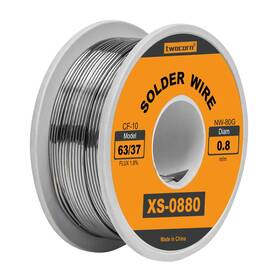
( Brand: Twocorn ), ( Part Type: Solder Wash ), ( Size: 0.8mm 80g ), ( Color: Silver ), ( Material: Tin-lead ), ( Unit Count: 16.0 ), ( UPC: 602581114185 ), ( Package Dimensions Lxwxh: 2.44x2.32x0.71 Inches ), ( Weight: 0.2 Pounds )
Review TWOCORN 63/37 Solder Wire High Purity No wash Tin lead Rosin Cored
The **TwoCorn 602581114185 63/37 High-Purity Solder Wire with Rosin Core** is a premium-grade, no-wash tin-lead solder designed for precision soldering applications where reliability, consistency, and performance are paramount. Engineered with a **63% tin and 37% lead alloy**, this solder wire strikes an ideal balance between mechanical strength, thermal conductivity, and wetting properties, making it a versatile choice for electronics assembly, repair work, and hobbyist projects. The **high-purity composition** ensures minimal impurities, reducing the risk of cold solder joints, bridging, or premature component failure, while the **rosin flux core** provides effective oxidation protection and promotes clean, strong bonds without the need for post-soldering cleaning a significant advantage for both professional and DIY users. Ideal for through-hole and surface-mount applications, this solder wire delivers exceptional flow and adhesion, even in tight spaces or high-temperature environments, ensuring durable connections that withstand mechanical stress and thermal cycling. Its smooth, uniform diameter and consistent flux activation further enhance usability, reducing the likelihood of clogs in soldering irons or desoldering tools. Whether used in prototyping, manufacturing, or troubleshooting, this solder wire offers a dependable, no-fuss solution for achieving professional-quality solder joints with minimal effort.
**Pros and Cons of Buying TwoCorn 602581114185 (63/37 Tin-Lead, Rosin-Cored, High Purity, No-Wash Solder Wire)**
### **Pros:**1. **Standard Tin-Lead Alloy (63/37)** This is a widely used and reliable solder composition, especially for applications requiring mechanical strength and good electrical conductivity. It s less prone to brittle failure compared to pure tin or other alloys, making it suitable for high-stress or high-temperature environments.
2. **Rosin-Cored** The flux core provides adequate cleaning and wetting properties for most soldering tasks, reducing the need for additional flux. This is ideal for beginners or hobbyists who may not want to handle separate flux applications.
3. **No-Wash Required** Unlike water-soluble flux cored wires, this solder doesn t require post-soldering cleaning with water or alcohol, simplifying the process for small-scale or one-off projects.
4. **High Purity** The "high purity" designation suggests fewer impurities, which can improve solder joint reliability and reduce issues like oxidation or weak bonds.
5. **Cost-Effective** Compared to lead-free solders, tin-lead alloys are generally cheaper, making this a budget-friendly option for bulk or frequent use.
6. **Compatibility with Older Components** Many legacy or high-temperature components (e.g., some relays, connectors, or automotive parts) perform better with tin-lead solder, as it has a higher melting point ( 183 C) and better mechanical properties than lead-free alternatives.
7. **Wide Availability** As a common solder type, this wire is easy to find in electronics stores, online retailers, or bulk suppliers, reducing lead times.
8. **Good for Learning** Ideal for beginners due to its forgiving nature; it s less likely to cause cold solder joints or bridging issues compared to more sensitive solders.
---
### **Cons:**1. **Contains Lead** Lead is a neurotoxin, especially hazardous when inhaled as fumes during soldering. Prolonged exposure (e.g., in poorly ventilated spaces) can pose health risks. This makes it less suitable for professional environments without proper ventilation (e.g., fume extractors or soldering stations with filters).
2. **Environmental Concerns** Lead is difficult to dispose of safely and can contaminate landfills or recycling streams. Many regions have restrictions or bans on lead-containing solders for commercial or industrial use.
3. **Regulatory Restrictions** In some countries (e.g., EU under RoHS directives), lead-based solders are banned for new electronic products, limiting its use in consumer electronics manufacturing.
4. **Lower Temperature Performance** While tin-lead solder works well for most hobbyist or low-to-moderate temperature applications, it may not be optimal for high-temperature soldering (e.g., soldering thick copper traces or components with high thermal mass), where lead-free solders (e.g., SAC305) might perform better.
5. **Potential for Oxidation** Over time, exposed solder can oxidize, especially if stored improperly (e.g., in humid conditions). This may require occasional cleaning of the tip before use.
6. **Less Common in Modern Manufacturing** Many professional or high-volume manufacturers have transitioned to lead-free solders due to regulatory pressures, so finding compatible components or suppliers may be harder in some contexts.
7. **Fume Generation** When heated, lead-based solder emits toxic fumes. While less volatile than some other metals, proper ventilation is still necessary to avoid inhalation risks.
8. **Limited Shelf Life** Like all solders, this wire can degrade if stored improperly (e.g., exposed to moisture or extreme temperatures), potentially leading to poor wetting or inconsistent performance.
---
### **Conclusion:**The **TwoCorn 63/37 tin-lead rosin-cored solder wire** is an excellent choice for **hobbyists, DIY enthusiasts, or small-scale projects** where cost, ease of use, and reliability are priorities. Its standard alloy composition, no-wash convenience, and broad compatibility with older components make it a practical option for repairing electronics, prototyping, or learning soldering techniques. However, its **lead content introduces health and environmental risks**, making it less ideal for professional or large-scale use without proper safety measures.
For **commercial, industrial, or high-volume applications**, lead-free solders are increasingly the standard due to regulatory requirements. If you re working in a **well-ventilated area** (e.g., with a fume extractor) and prioritize **mechanical strength and cost efficiency**, this solder is a solid pick. For **health-conscious or eco-friendly soldering**, consider lead-free alternatives like SAC305 or high-purity tin.
### **Recommendation:** - **Buy this solder if:**- You re a hobbyist or student soldering occasionally.
- You re working with legacy components or high-temperature applications where tin-lead performs better.
- You prefer a no-wash, easy-to-use solder for small projects.
- You have adequate ventilation (e.g., soldering in a well-ventilated room or using a fume extractor).
- **Avoid or consider alternatives if:**- You re soldering professionally or in a regulated environment where lead-free is required.
- You re concerned about long-term health risks from lead exposure.
- You re working on sensitive or high-reliability electronics where lead-free solders (e.g., SAC305) are preferred.
- You re disposing of solder in areas with strict environmental regulations.
For most **modern consumer electronics projects**, a **lead-free rosin-cored solder** (e.g., SAC305) would be the safer and more compliant choice. However, if you re working on **retro electronics, automotive repairs, or mechanical soldering tasks**, this tin-lead wire remains a practical and effective option.
Details:
Easy to use: Suitable for beginners and people with many years of soldering experience. Alloy parameter: Tin content 63%, lead 37%, solder flux 1.8%. Specifications: The solder wire diameter is 0.8mm 0.0315inch, Weight 80g 0.17lb, which easy for you to carry. Application: Used in circuit board, radio, TV, refrigerator, air conditioning and other household appliances maintenance electronic products soldering.
Ability: low melting point, good fluidity, fast soldering speed, strong adhesion, solid solder joint and many other advantages.
specifications weldtoolsam:
- brand: Twocorn
- part type: Solder Wash
- size: 0.8mm 80g
- color: Silver
- material: Tin-lead
- unit count: 16.0
- upc: 602581114185
- package dimensions lxwxh: 2.44x2.32x0.71 Inches
- weight: 0.2 Pounds
offer weldtoolsam:
- availability: In Stock
- started: May 12, 2026
- quantity: 1
- sold: 0
- options: Ship-to-home
returns weldtoolsam:
- time: 30 Days
- policy: Returns Accepted
- method: Money back
- paid by: Seller
general weldtoolsam:
- Tools Workshop Equipment > Power Tools > Welding Soldering Tools
- condition: New
shipping weldtoolsam:
- transit: 3-9 Days
- service: Standard
- type: Fixed
- cost: $0.00
- class: Standard
seller weldtoolsam:
- # reviews: 39
- city: Garden Grove, California
- rating: 100.0%
payments weldtoolsam:
- other
- credit card: Mastercard
- wallet: Apple-pay